Thursday, January 18, 2018

With A Song in the Heart


Ubi—
            the glare of,
                        —caritas—
            yes, 
the sun’s benevolent glare
                                    —et amor—
            on her wedding day

birds singing in the trees;
musicians playing and singing;
a song arose in her own heart.

—congregavit nos in unum—
            “we are gathered together”
—simul ergo cum in unum congregemus—
            “as gathered into one body”

behind the glare of the sun
stood an angel aglow with fire,
bearing circlets of rose and lily.

—ne nos mente dividamur—
            “let those who are now joined”
                        —caveamus—
            “not be sundered”

the husband and his brother
deigned to the swim she offered,
according to the song of her heart.

—Exultemus—
           
let us Rejoice!
                        for the vision seen
                        for the life given
                        for the love shared

—cantantibus organis—
           
for while the music played
            the glare of the sun
            tore open the sky
            broke open her heart
            and the stars flocked like birds
            through its torn veil
            bringing their heavenly songs
            to every open place.

—dum aurora finem daret—
           
at the last stroke,
            into the open earth
            her heart sang out,
            pure to the last
—fiat cor meum immaculatum—

—non confundar
            alleluia
            alleluia

—Deus ibi est
            alleluia
            alleluia


© 2017 by Elisabeth T. Eliassen

//

Cecilia (patron saint of musicians and poets and venerated in the Roman canon of the mass) is a most unlikely saint from Roman times. No particular miracles are attributed to her, although she was able to convince two men (her new husband and his brother) that she knew an angel; she was martyred because she was a Christian (though, according to legend, was apparently difficult to dispatch); and when her remains were uncovered centuries later, they were incorrupt, to the astonishment of those who discovered them. There are a few quotes attributed to her that are probably derivative of psalms, and not much else is known.

But mythmaking, I believe, always has a basis in truth; there was a person so special that her memory could not be erased from her community, even generations following her death. The basis of truth about Cecilia is perhaps that she sang, and she wanted her song to be for Jesus, for God. Oddly, the root of the name implies blindness; this person’s perception was evidently triggered and opened by music to experience the divine.

That is most likely the miracle.

I have folded words from the hymn “Ubi Caritas,” as well as some the words attributed to Cecilia into this meditation (apologies for any over-simplifications of the Latin on my part):

Ubi caritas et amor – where benevolence and love are
Congregavit nos in unum – we are gathered into one
Simul ergo cum in unum congregemus – as we are gathered into one body
Ne nos mente dividamur, caveamus – beware, lest we be of divided mind
Exultemus – Rejoice
Cantantibus organis – instruments played
Dum aurora finem daret – while dawn was breaking into day
Fiat cor meum immaculatum – let my heart stay pure

Non confundar – not be confounded
Deus ibi est – God is there


Monday, January 15, 2018

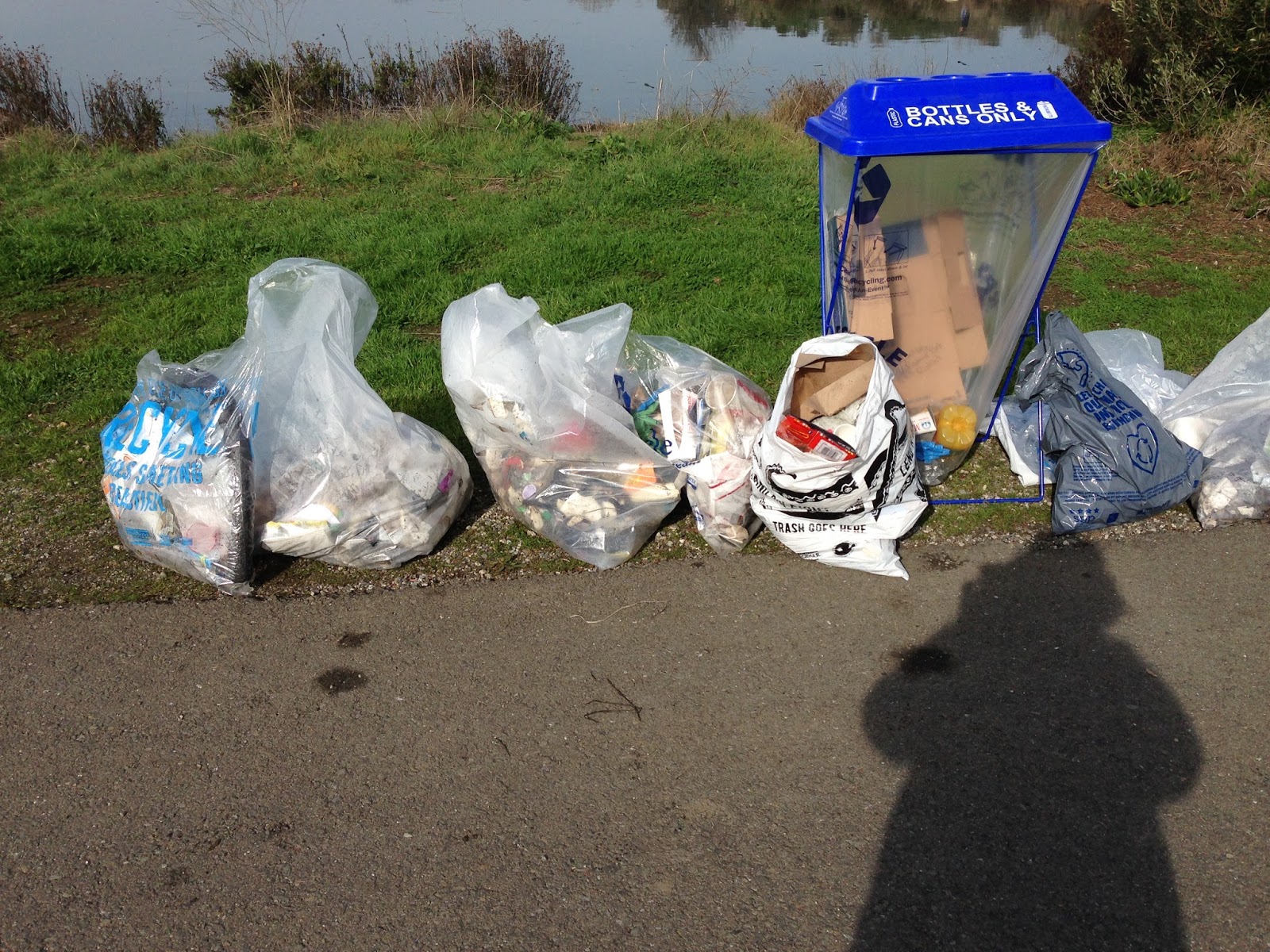
Penance


Flotillas of birds skim the near distance, observing;
the shore being taken up by throngs of people
with buckets, bags and sticks.

I wonder, do they judge us?
Do they scorn or laugh or jeer?
They’d be within their rights.

Bottle tops, cigarette butts, candy wrappers;
Plastic straws, seven left shoes, a tarp;
Coffee lids, condoms, a mitt for catchers.

Packing peanuts, pills and partitions;
foam that will never break down into loam;
cosmetic jars, wine bottles, crushed can renditions.

We sweep and we swarm,
picking through weeds and thorn,
to get at an old tire, wheel rusted and worn.

The tide moves in, signaling our defeat,
as more bags and bottles drift, from farther out, in,
while all bag what was retrieved and retreat.

The birds take to the cleaner shore,
ready to bask and snooze in the sun;
we leave, wishing we could do more.

This is both a penance and a futility,
even done each day forever, of a utility
useless to blot the sin of our pollution.

Our penance is received, nevertheless;
one wonders if we can heal our world
by means of such feeble efforts;
napping birds make no answer, busy at rest.


© 2018 by Elisabeth T. Eliassen


Friday, December 22, 2017

A Message for the Season: Preach the Gospel of Peace

For more than half my life, this time of year has been accompanied by multiple performances of Handel’s Messiah. I have sung all the different historical versions of this oratorio, both as chorister and as soloist. I have three different editions of the score for this masterwork, and these are the most used scores in my music library.

The libretto for this oratorio was assembled by Charles Jennens, who used snippets of biblical scripture to form a narrative that follows the church year from Advent through Easter. With every year and every single iteration, I discover and hear the piece anew.

This year, four sections of Part II stood out for me, although I would rather have them heard in a different order. In Scene VI of Part II, the bass sings the aria, Why do the nations so furiously rage together? This is followed by the chorus, Let us break their Bonds asunder.

Here are the complete texts for these two sections that comprise Scene VI:

ARIA – Bass

Why do the Nations so furiously rage together? and why do the People imagine a vain Thing? The Kings of the Earth rise up, and the Rulers take Counsel together against the Lord and against his Anointed. (Psalm 2:1-2)

CHORUS

Let us break their Bonds asunder, and cast away their Yokes from us. (Psalm 2:3)

This year, I felt as though the two sections from Scene V, immediately previous to Scene VI, should follow these texts.

ARIA – Soprano

How beautiful are the Feet of them that preach the gospel of peace and bring glad tidings of good things. (Romans 10:15)

CHORUS

Their sound is gone out into all Lands, and their Words unto the ends of the World. (Romans 10:18)

This year, 2017, has been difficult and painful in so many ways it would take too long to enumerate them all. I know so many who have been personally anguished, injured, suffered financial setbacks and job losses. Friends and family members have died, as well as exemplars and cultural heroes. Our family has experienced all these things; perhaps, so too has yours.

This country has become mired in cynicism and hypocrisy that is being played out in the highest government offices by people who mock the notion of common good; such people actively work against equality, each according to their need. These people are not “public servants” but are rather self-serving.

The Nations of the Earth may engage in this “game of thrones” – but, the planet cannot survive such hubris, much less the inhabitants. We must break the bonds of… what, exactly? Power? Wealth? Narcissism? The bonds are cultural, and not limited to our culture alone; but certainly our culture has driven this venality and actively unraveled our national sense of empathy. Portions of our citizenry have been taught to fear and despise others, and those defined as such are treated as scapegoats for every problem we experience.

We learn about this in grade school, don’t we? About petty bullies mistreating people they have objectified and labeled as inferior. This thing we learned about in grade school is being played out big time in our national life, and is threatening all our international relationships.

What is to be done? What can we do? What can I do, or you?

We can Break their Bonds asunder. Those people do not speak for me or for you. They may cast their edicts, but we know the truth behind their lies. We can and we must act to do the right thing, whenever and however possible, despite the warped edicts of petty despots and bullies.

How do we Break their Bonds asunder? By Preaching the gospel of peace, and sending that message out from our homes and into our neighborhoods, towns, cities, counties and states. What is the gospel of peace, precisely? It is the message that we all belong, that we all have dignity; and we honor this by working toward peace, by spreading good will, and acting toward goals of mutual good with everyone we meet. This is true citizenship.

The Kings of the Earth will fall from grace. Well, to be honest, some of them have never had anything akin to grace, in the first place. We can't let that stop us from working as a positive force for good. We might yet fold the negative into the positive...

My wishes for you on this day, at this hour – and in all the days and hours that follow:
  • Only do to and for others what you would have others do to and for you; accept every gift of grace and good intent. 
  • To break the bonds of oppression asunder, counter negativity and bad actors by doing good and spreading good wherever you are. 
  • Watch for those who need assistance, and offer it however you can; even a smile can change a person’s day.
  • Preach the gospel of peace and harmony; you don’t have to be loud, obnoxious or even religious to make your glad sound go out into all lands.

All of you are beautiful, who spread the gospel of peace and bring glad tidings of good things. I give thanks for the many of you I am fortunate to know and encounter in my life! 

May the light of your peace illumine every place where you step foot, and may 2018 be a year of blessing and positive transformation for you, your families – and your communities.

Tuesday, November 28, 2017

Ship of Fools, a broadside


Landscape irrevocably altered,
Old alliances have faltered;
The looming question each dawn:
“Whose side are you on?”
This winter of austerity
Can only bring prosperity
To the soft white belly
Of the fool on Hill and telly,
Whose sychophant minority consents
To sunset equalities and stir discontents,
Flattening any fanfare for the common man
By rendering opportunity null and ban.
Our constitution, so long ago knit,
Has been unraveled by the unfit,
And these very forces
Plan to upend our courses,
To suck all wind from each sail
Of the leaky boat we citizens bail.
Our anchor has thus been weighed:
Endless calumnies have put paid
To what ruthless and rudderless
Barbary captains do, regardless,
For they reign with impunity
—Our fool grants them immunity.
Time will record, but will it care
That the lawless bent the law bare,
Wreaking lives and ravaging land,
Draining toxic sludge into pristine sand?
With compass and mainsail set athwart,
A new Revolution is our last, best resort.

© 2017 by Elisabeth T. Eliassen

Thursday, November 23, 2017

Waking beneath swirling stars

Waking beneath swirling stars
into this kaleidoscopic array,
where colors, light and shadows play
through loud or unexpectedly quiet hours,
grateful for: fruit of the vine,
waiting to be crafted into wine;
all the prayerful, fragrant flowers
snug ‘neath warm and sunny ray;
the themes with variations
of being and doing, each day
a new start at the foundations;
the play of You at my horizon,
which is really the Play of Us,
hum-sung to grow and wisen
all toward easiness within, without fuss;
the freedom to know and accept love;
the curiosity to seek and explore,
both below the surface and above,
what can be known of music and rhythms,
in their proper expansions and contractions,
mind and heart exercising all possible lyricisms
beyond the care of doubting reactions;
borrowed place and renewing rest;
for the weight of others’ cares;
for communal work and quest;
for those willing hands, hearts, arms and chairs
offered in my own hours of need;
and more,
            and more,
                        and, oh, so much more;
take this as a pledge to sow and seed and cede
beauties where most appropriate, never forsaking.


© 2017 by Elisabeth T. Eliassen

Friday, September 22, 2017

Returning

Catalog of woe,
no need to say;
the Book does show
costs we can’t defray,
wrongs we know
we made — but may
we mindfully sew
better seeds on our way,
share the harvest, go
lightly, kindly, fairly, and pray;
debts we can outgrow,
redeem to new day,
admitting what we owe
and honoring, lovingly, to pay.


© Elisabeth T. Eliassen

Wednesday, September 20, 2017

Todtnauberg by Paul Celan - a translation


Arnika, Augentrost, der
Trunk aus dem Brunnen mit dem
Sternwürfel drauf,
in der
Hütte,
die in das Buch
- wessen Namen nahms auf
vor dem meinen?-,
die in dies Buch
geschriebene Zeile von
einer Hoffnung, heute,
auf eines Denkenden
kommendes 
Wort
im Herzen,
Waldwasen, uneingeebnet,
Orchis und Orchis, einzeln,
Krudes, später, im Fahren,
deutlich,
der uns fährt, der Mensch,
der's mit anhört,
die halb-
beschrittenen Knüppel-
pfade im Hochmoor,
Feuchtes,
viel.
(Frankfurt, 1. August 1967)
Arnica, eyebright, the
drink from the well with the
star-carved-die on it,
into the
Hut,
into the book
—whose name did it take
before mine?—
in this book,
the penned line about
a hope, today,
for the thinker's
coming
word
from the heart,
forest peat-sward, uneven,
orchid and orchid, singly,
crudeness, after, while driving,
explicit,
he who drives us, the man,
he also hears it,
the half-
trod log-paved
trails on the high moor,
cloy-clammy,
very much.


English rendering © 2017 by Elisabeth T. Eliassen


This poem by Celan, this very difficult poem, is a poem about place, about person, about the potential for healing and about hope unrealized. The brilliance of this piece is its economy (69 words), with at least half the words being each so pregnant with meaning that reams of commentary have been written on them.

I undertake my own variation at great risk—many, many more informed people than I have attempted to render this poem in English. My attempt is particular to me, owing to the presence and symbolism of plant life, and the fact that this poem is an entry in Celan’s internal diary.

This poem is a single-line sketch of the 1967 meeting Celan had with the philosopher Martin Heidegger at his Todtnauberg cabin retreat called “der Hütte.”

For just the barest background, Celan and Heidegger were engaged in intellectual dialogue between the years 1952 and 1970; Celan had a great deal of admiration for the work of the philosopher, discovering similar views on “truth” and “language”, “time” and “being”, and how “language speaks.” But Celan also had a great deal of ambivalence toward Heidegger because of his affiliation, collaboration with Nazism, while Rector of the University of Freiburg, for which he seemed reluctant to express public – or private – regret. For Celan, the German-speaking Jewish Romanian survivor of a labor camp, whose parents were deported and died at an internment camp, this “fact” of Heidegger’s complicity with Nazism created an insurmountable gulf, despite mutual admiration and shared dialogue, despite Heidegger’s support of Celan’s work.

Shortly after giving a Der Spiegel interview, and following Paul Celan’s July 24, 1967 lecture at Freiburg, Martin Heidegger took Celan to see his cabin at Todtnauberg. Celan signed the famous guestbook, the two men engaged in a brief conversation, followed by a short walk and a drive back to town.

Brevity is key. The poem is all too brief; in fact, it seems rushed.

The botanical surroundings, at first, breathe hope into the encounter. Arnica Montana, that bright yellow asterid, dots the landscape surrounding the cabin; so, too, eyebright, another asterid—this one’s flower is shaped like two lips. Arnica, a balm for bruises; eyebright has been used for centuries to quell eyestrain, to bring a return to visual clarity, or to relieve inflammations of the upper respiratory system. The only caveat is that eyebright grows as a semi-parasitic plant in conjunction with various grasses and other plants.

There is a tapped spring, right alongside the cabin, a source of life and renewal. A cube, carved in the shape of a star, adorns the top of the post that houses the waterspout that feeds water into a long stone trough. The poem doesn’t really indicate a cube, however—the word choice indicates that carved block is like a die. So, chance may be at work; the meeting may not be by chance, but the visitor may be taking a gamble. Even so, the scene continues to seem benign and full of potential. The visitor takes a refreshing drink of the pure mountain water.

And then he is brought into the cabin and invited to sign the guestbook, this book that has taken many names before his. Do the names of other Jews reside in these pages? The visitor cannot help but associate this taking of the name and documenting of his name; perhaps in two ways—on one side, in the Book of Life, juxtaposed on another side against the meticulous records Nazis kept with regard to atrocities and thefts against the Jewish people.

The visitor recorded this line in the guest book:

“Ins Hüttenbuch, mit dem Blick auf den Brunnenstern, mit einer Hoffnung auf ein Kommendes Wort im Herzen. Am 25. Juli 1967 / Paul Celan.”

“In the book in the cottage, with a view of the well star, with the hope of a word to come in the heart. July 25, 1967, Paul Celan.” 

In whose heart was the hope of a word, at that moment, I wonder?

In the poem, clearly the word is desired by the visitor of the thinker, the philosopher. This is a kind of pilgrimage.

But the poem does not even hint at discussion. The time in the hut seems but no time at all, and they are back outdoors, walking briefly over the damp ground, one orchid beside one orchid. The mountain orchid has been used medicinally for centuries in Europe to ease gastro-intestinal complaints; the Chinese use orchid medicine to improve eyesight and boost the immune system. More to the point, in this poem, the plants consist of a double bulb, very like testicles in shape; one German word for orchid is Knabenkraut (boy’s weed). Celan refers to orchids in other poems. I am not sure if Celan would have been aware of Zen symbolism of orchid as “poet” and “thinker”, but I will gamble on that. The poet walks alongside the thinker, but they are not joined as brothers; instead, they are just as contained and separate as they were when they arrived at this locus. Further, the ground is uneven, so they are not on the same footing, at the same level.

The pilgrimage fails to ford the chasm, despite the appearance of benignity and healing.

The visit further dispels any notion that such a transcendence of their differences can take place, with unfortunate words being uttered during the car ride back to town. It is unclear who uttered the words, but the visitor claims the driver to be a witness who can verify, leaving the implication towards the thinker, speaking without thinking, perhaps.

As they drive back to town, the occupants of the car pass by and through wooded areas, partially logged, with log covered foot trails, perhaps owing to the moistness of the landscape. The living pines stick up straight, the logs lining the path are likewise straight, like cudgels, in the soggy, peaty ground, dispelling the artifice of the semiotic presence of the benign, the healing, and the hopeful. Now, it seems as if the ground is swollen with rot; this meeting is no longer an idyll with an idol. The idol has proved himself not to be worthy – or, the pilgrim has not brought forth the purpose of his quest.

While others tend to translating “Wort im Herzen” into English more literally as “word in heart,” I chose “word from the heart” because I understand the point of the meeting to be a pilgrimage, in search of a means by which to transcend the gulf of differences into brotherhood, if the thinker could but offer a heartfelt word of some kind. Instead, the meeting seemed perfunctory, and whatever discussion exchanged is either insubstantial (at the cabin) or “crude” and “explicitly so” on the way back, in the car.

The encounter that inspired this poem did not end well; but the two men continued to communicate with one another, even if the communications were somewhat strained, until the end of Celan’s life.


//

Despite this pessimistic reading (really the only choice available), I suggest that implicit in the poem is the endless potential for healing, if the all important (magical?) word will be spoken. The potential for the positive and the healing is always alive, always rich, always supported. The fact that healing and transcendence were not experienced here was a matter of choice, both on the part of the thinker and on the part of the poet. Place was not the primary factor, neither was the timing. Overloaded expectations may have been a factor, as well as courage or lack thereof, toward articulating a question. Certainly, an inner struggle and perhaps a crisis of identity factored into this outcome.

Perhaps I chose to explore this poem on this day is to suggest that brother/sisterhood is always a worthy goal, and always possible – if one can bridge the chasms of ethnicity, class, race, religion, criminal record, victimhood, guilt, shyness… loneliness. And this may be at some cost, but it should never be at the cost of personhood and self-value/self-respect.

Pristine water still wells from the spring; the arnica and eyebright, the orchids still grow and bloom; the turf and the trees provide fuel and shelter. We humans pass through this land of potential, and don’t often enough use the good of what is provided. We opt instead to avoid, or worse utter the unmindful word, and tend toward the destruction of what is good.

My thought and prayer for you, for me, for all of us this day: Positive potential greets you, everyday; don’t be afraid to engage it. Don't let unrealized hope close the book on your quest.